
Soap Making
A story about soap and link to a recipe.

I’ve been interested in making soap for many years. I remember once watching an episode of Burkes Back Yard (who in Oz remembers watching that?) and they had someone making soap and I thought – that’s what I need to do. Although, I never did get around to doing it back then! When I talk to people now about making soap, they say the same thing I told myself all those years ago….. “I don’t know how to start, what if I stuff it up and isn’t it dangerous?”
And really, it’s quite simple – you start at the beginning, it’s hard to stuff up and doesn’t cost much if you do, and yes, lye is dangerous, but it’s amazing what a little common sense, rubber gloves and maybe safety glasses can do.
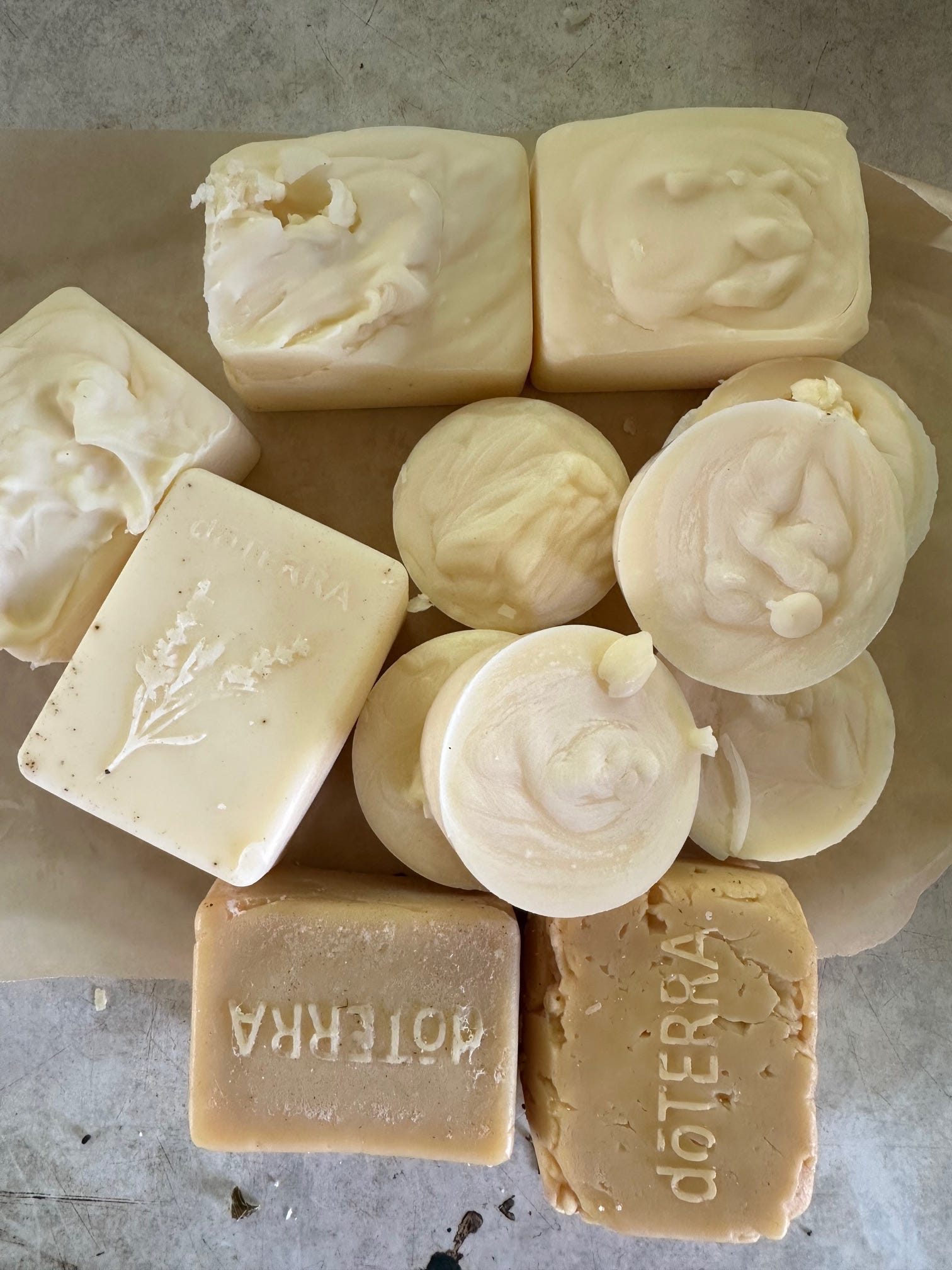
Two different batches - same recipe but slightly different colour - the darker one went to trace quicker than the lighter one.
When we were involved in the free-range pig business, I was going to the Yeppoon markets fortnightly. Next to me was a lovely lady called Noelene. She sold soap. She sold lovely soap. I asked her about making soap for me with our lard and my raw milk. She did for quite a few years. One day she offered to teach me how to make it and so I spent a lovely couple of hours with her learning that it’s not that hard, it’s actually fairly easy and it’s not that dangerous, as long as you’re careful and sensible.
I still follow her instructions, but not her recipe. I’ve been really happy with my 100% tallow recipe and I’m sticking to that. Tallow is something we usually have more than we need of. I actually use goat tallow mostly because it’s my least preferred cooking tallow.
My two sisters and I went along to a soap making course in Rockhampton one time and learnt a few more different ways to make soap, and this included many slightly different recipes. There’s a lot of different additives that you can add - coffee soap, oatmeal soap, milk soap etc. As I said, I’m sticking to tallow soap, but I may add milk to a batch to see how that compares with the straight tallow.
When we moved to Canberra and I had a little more time to do some research, I learnt about soap calculators and superfat and all sorts of other things. I worked out how to use the calculator and this was great for using different oils and fats, especially as I didn’t have a lot of tallow that year.
Here are two soap calculators. I also learnt that super fat is the amount of fat that doesn’t turn into soap. For dish washing you want a very low fat % soap as you don’t want fat residue. Hair, you want a little higher percentage, but not as much as you would want for your skin. Other notes I took back then, said that coconut oil is drying on skin, but good on hair. I wrote that 100% tallow soap would be good for cleaning as it has a very low super fat percentage. For this reason, it would be too harsh for the skin. I have not found this to be true.
I have no desire to continue that research or to confirm my notes, and I’ve forgotten how to use the calculator! I’ve been making 100% tallow soap for a couple of years now and I love it. It’s good on my skin, for my hair and I occasionally I use it for washing up the dishes. The only thing I’ve found, is that the longer I can leave the soap, the nicer it is. I’m using some that is a year old and it’s lovely and sudsy and soft. I’ve just made another two batches and when I start on them, I’ll make another batch so that it’s got plenty of time to cure.
Link to the soap recipe that I use: Tallow Soap
I would suggest that if you want to make soap with fats and oils other than tallow, you use a soap calculator as this will take out a lot of the doubt over whether it will work or not. If you want to make tallow soap, then this is the recipe for you. I have gotten it from this site and have given it here with my way of doing it. I’ve got a document for my paid subscribers that you can print off and complete when you make soap. I do this, so that I can keep track of what might be different if the soap is different. This will be in a separate post with a “how to” video.
The two recent batches I made turned out slightly different in the making. I won’t know how they perform for a while so when I do use them, I’ll write some more notes. The first batch I made, the tallow was from an older cow and her fat was yellow. The fat itself had a grainy texture and smelt strong. It didn’t smell bad or rancid, just strong. When I mixed it, it went to trace quite fast and got thick and difficult to pour by the time I had poured it all out.
The second batch, the tallow was whiter and much smoother. It took longer to get to trace and was slower to set, so poured more smoothly.
Both batches came out of the moulds well. So, time will tell if there’s any difference in the soapability– will one be sudsier or hard? From my experience the only difference between a good and bad soap is time.
A note on essential oil or fragrances. In my experience essential oil smell doesn’t really hold. I think you need to use too much to get a noticeable smell. For this reason, I think a lot of soaps might have fragrances rather than essential oil. I usually don’t bother adding oil, although I did add oil to one of these and so I’ll see if it makes any difference.
One thing to keep in mind when making soap and to allay the fear. Always add the caustic soda to the water. If you do it the other way around, it can erupt, and then that is dangerous.
I don’t do it, but if you’re adding milk, colouring, exfoliant or other dry additives. Weigh them out separately. Keep milk very cold. Add these items after reaching trace. Add colour first, exfoliant and/or dry additives second, milk next and then essential oils last.
Use equipment that is just for soap making. Use an old saucepan, old jug or bucket for mixing the lye solution, spatula, stick blender etc. When washing everything up, don’t pour it all down the sink. Wash up in your saucepan and take it outside to dump it somewhere. It could potentially clog up your drains - it’s kind of
still fat at this stage and not soap!
Noelene told me to do one batch at a time, not to double up the batch, so I’ve always done that. I’ll often do two batches, 24 hours apart. Around 1000g of fat/oils is a good amount for one batch. She also said that you could mix any different fats and oils as long as the weight was the same as per recipe, but as I’ve mentioned before, it might be a good idea to use the soap calculator to make sure. From memory, you put the fats you want to use and it works out the caustic soda and water you need to get the correct lye solution.
Keep track of what your recipe is and how it turns out. Then record what the finished soap is like to use. It’s recommended that you don’t use the soap for at least 4 weeks, but I think 8 is better. Usually the longer you leave it the better the soap is. Please let me know if you make your own soap and if there’s anything that you think I could add to make making soap easier.
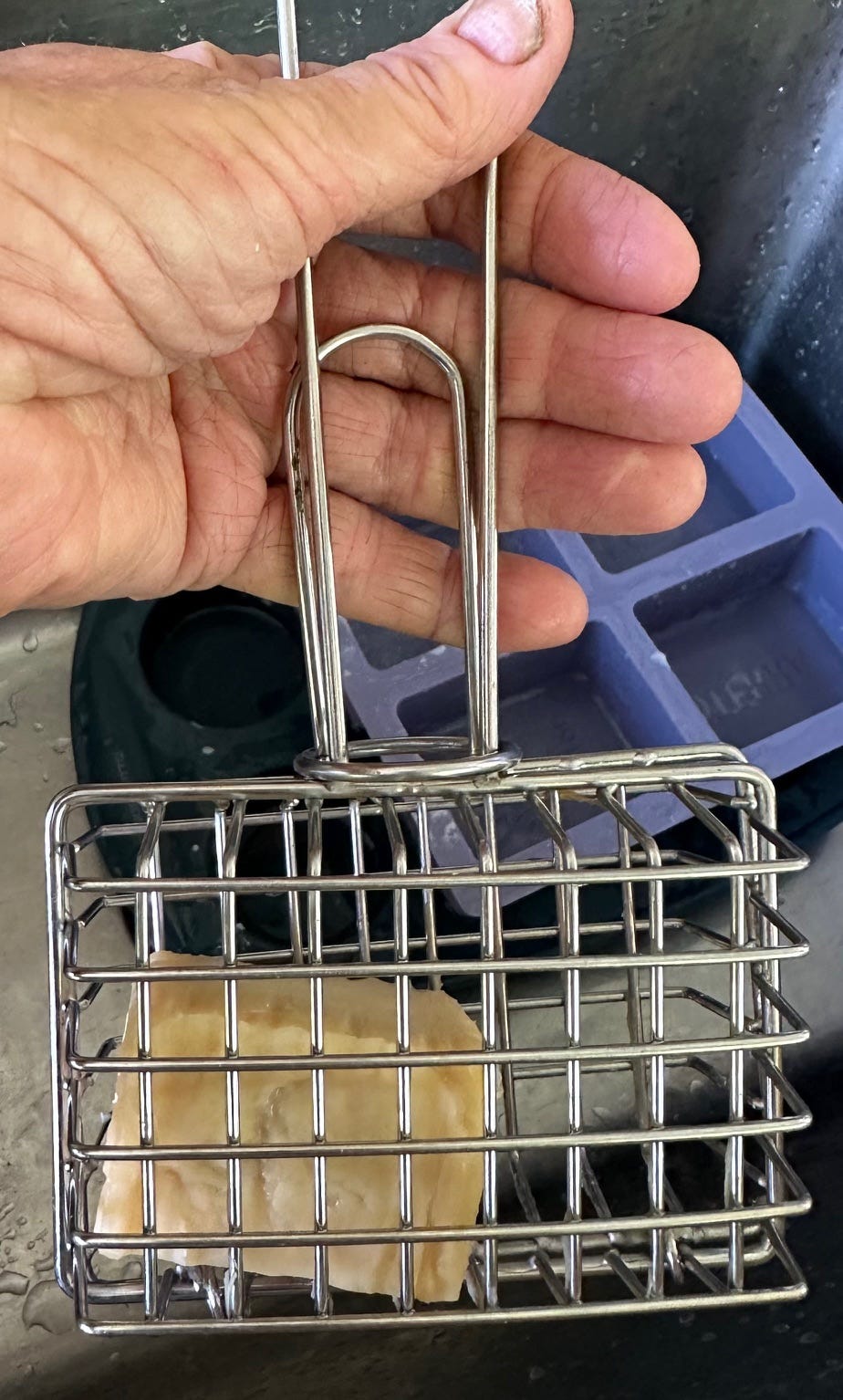
You can buy one of these things and use your own soap to wash the dishes rather than dishwashing liquid.
Further proof that you are amazing Lucy House.
We used to make soap a long time ago when we first started out of tallow and red devil lye, the latter of which is apparently an ingredient used for manufacturing meth. "You making meth?" I remember the owner of the hardware store asking. "No, just soap," I said. I'm not sure or not if he believed me, but he sold it to me nonetheless. Occasionally, we will still make soap, but we do the melt and pour stuff and just add a little bit of beeswax and honey to it, as rendering the tallow was always an ordeal. Great post!